What does…?
How do I…?
What on earth…?
Here are some tools and resources to help you on your way to understanding the quirks and enigmas of Recipe Books.
-
Most recipe books included in digital collections are written in English that was typical for the Early Modern era (late 1400s-1700s). Fewer standards for spelling and grammar during this era presents additional challenges in deciphering ingredient or recipe instructions. A word might be spelled one way in the first sentence of a paragraph and will have been spelled three other ways by the end of that same paragraph. Attempting to read names aloud may be useful in deciphering what is trying to be communicated.
The following resources may also be helpful when deciphering handwriting and grammar from that time period:
Grammar in early modern English (Oxford English Dictionary)
Palaeography: reading old handwriting 1500 - 1800, A practical online tutorial (The National Archives, UK)
English Handwriting Online 1500-1700: an online course (University of Cambridge)
-
Units of measurement in the Early Modern era lacked the standardization that we know today. Prior to the Weights and Measurements Act 1824- the origin of Imperial units and standardization of measurement in the British Empire- the methods of measuring goods were subject to various standards. Most often referred to as ‘English units’, these measurements were derived from Roman and Anglo-Saxon units and could be redefined or affirmed by the monarchy, as was the case with Winchester Units by King Henry VII in the 15th century and the Exchequer Standards by Queen Elizabeth I in the 16th century (source).
With this history in mind, reading measurements in recipe books should be done with the understanding that common, shared terminology does not equate to standardization. The authors and users of recipe books interpreted and recorded measurements using their own utensils, vessels, and- when appropriate- hands. It would be reasonable to surmise that instructions that indicate adding an ingredient ‘as appropriate’ or until a desired outcome was achieved were written with this variation in mind. This does operate on the assumption the practitioner has a baseline understanding of what the result should be and is indicative of a system of knowledge sharing where hands-on practice would have been involved.
Below are two sections of resources, the first being a table of terms used in the recipe books highlighted on this website and the second being a list of online and print resources for additional details and context.
The following resources will provide you with more precise interpretations of common Early Modern measurements:Early Modern Measurements (Folger Shakespeare Library)
For additional detail and context about the history of weights and measures in the British Empire, the following resources may be helpful:Hosch, W. L. (2011). The Britannica Guide to numbers and measurement. Britannica Educational Pub. in association with Rosen Educational Services.
Zupko, R. E. (1977). British weights & measures: A history from antiquity to the seventeenth century. The Univ. of Wisconsin Press.
-
Reading Early Modern recipes can feel similar to cracking a top-secret cipher. The language used to describe ingredients has evolved through the centuries, and many of the words used have changed meaning or are simply not used anymore. For example, “hartshorn” is an ingredient used in medicinal powders treating ailments like worms and diarrhea, in addition to baking recipes. Today, we know this as ammonium carbonate or baker’s ammonia- an effective emetic, absorbent, and leavening agent. Other ingredients may be referred to by their Latin names, as commonly seen with plants and minerals.
It is worth noting that, while infrequent, there are some ingredients that are unidentifiable but there is a general understanding of its purpose based on the context of use. “Mithridate” is one such ingredient, where the extent of our modern understanding is that it was used as an antidote against all poisons.
The spreadsheet linked below acts as a glossary for many of the lesser known ingredients included in recipe books. Please note that Latin plant names are not included. This glossary is a living document in that it will continue to be updated over time.
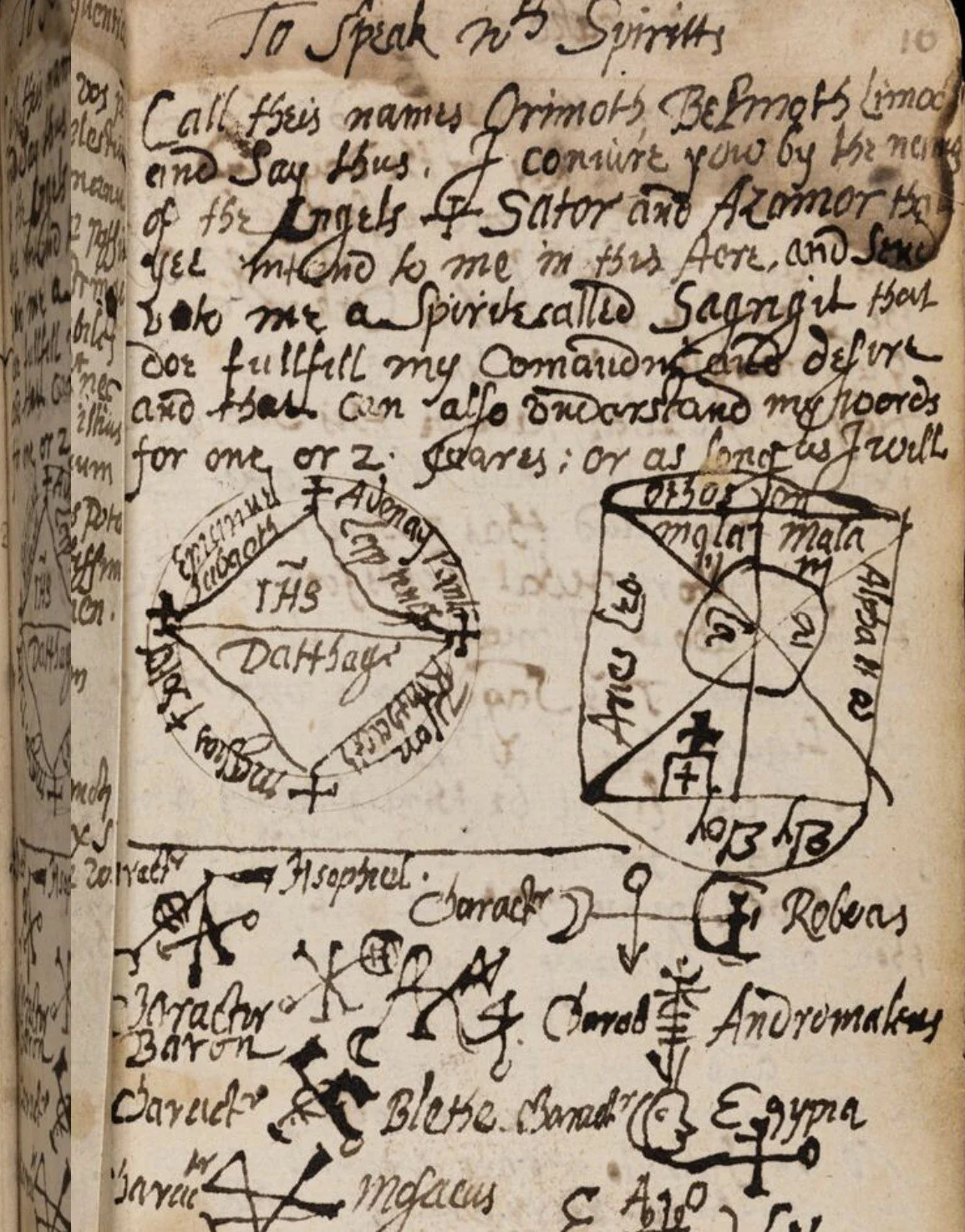
Book of magical charms : manuscript (Newberry Library, MS 5017; p.17)
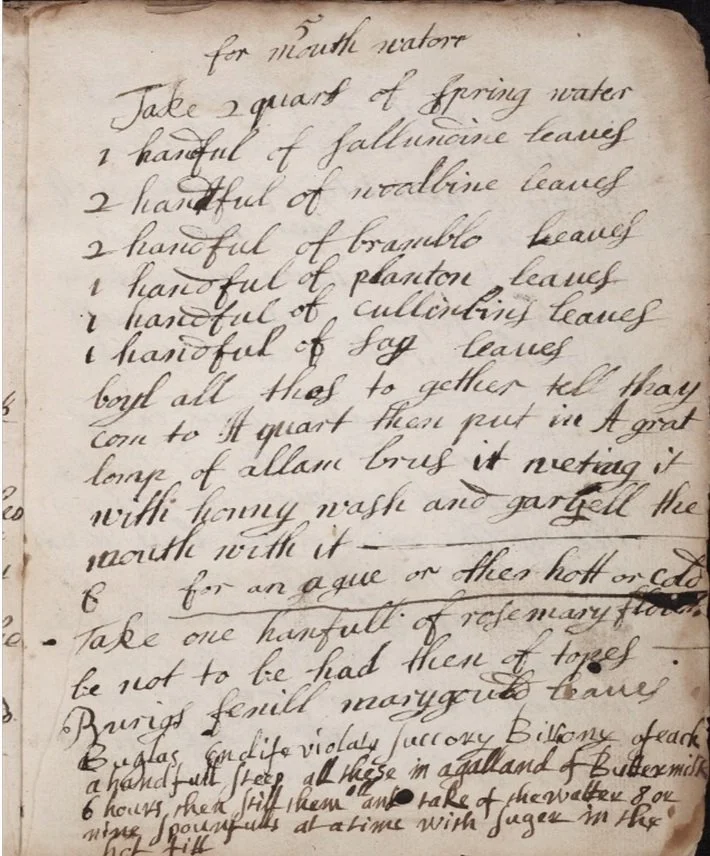
[Medical recipe book (University of Pennsylvania Libraries, MSS 03340; p. 7)
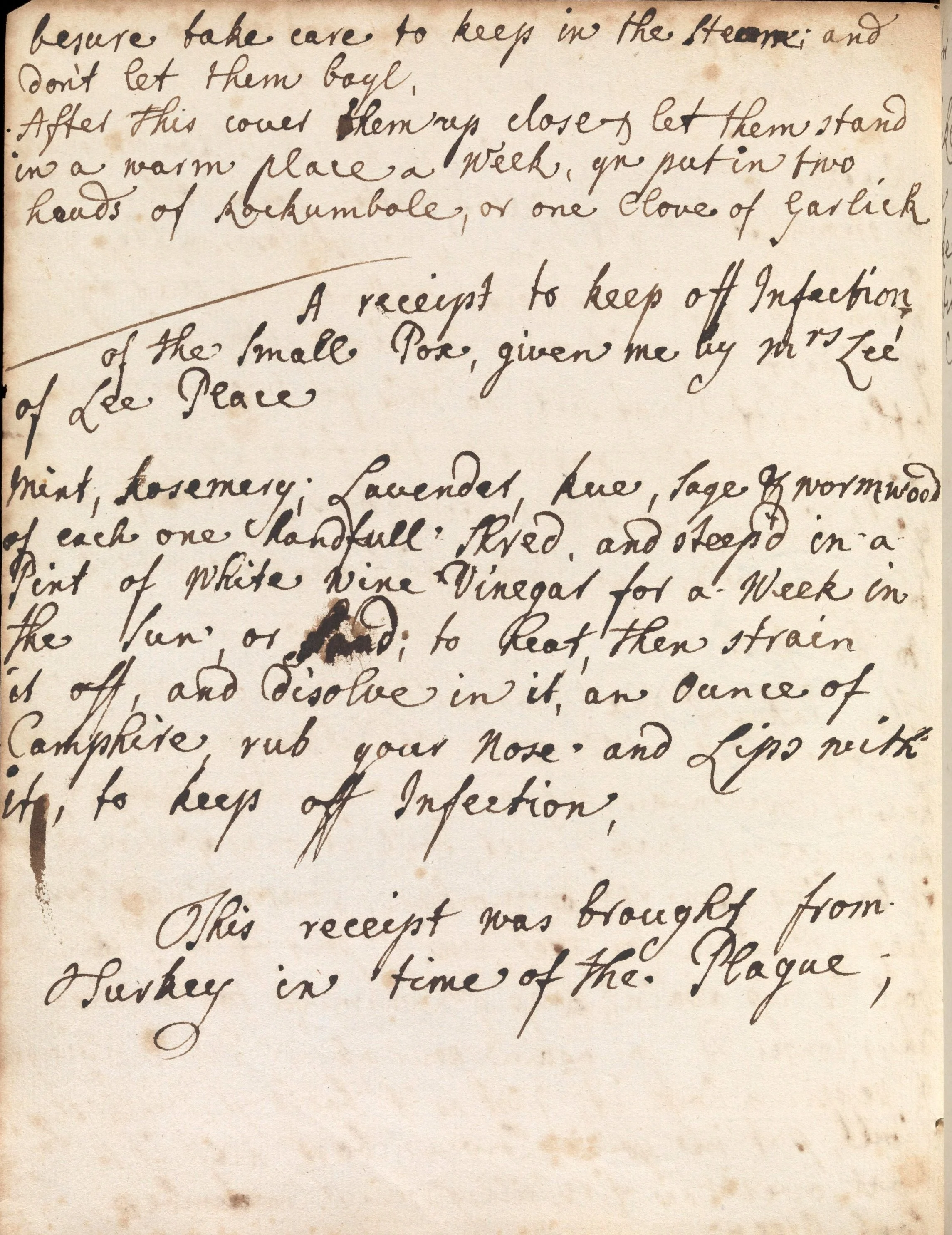
English culinary and medical recipe book, 18th century (Wellcome Collection, MS.8468; p.40)